Can You Legally Sweep Your Own Chimney in the UK?
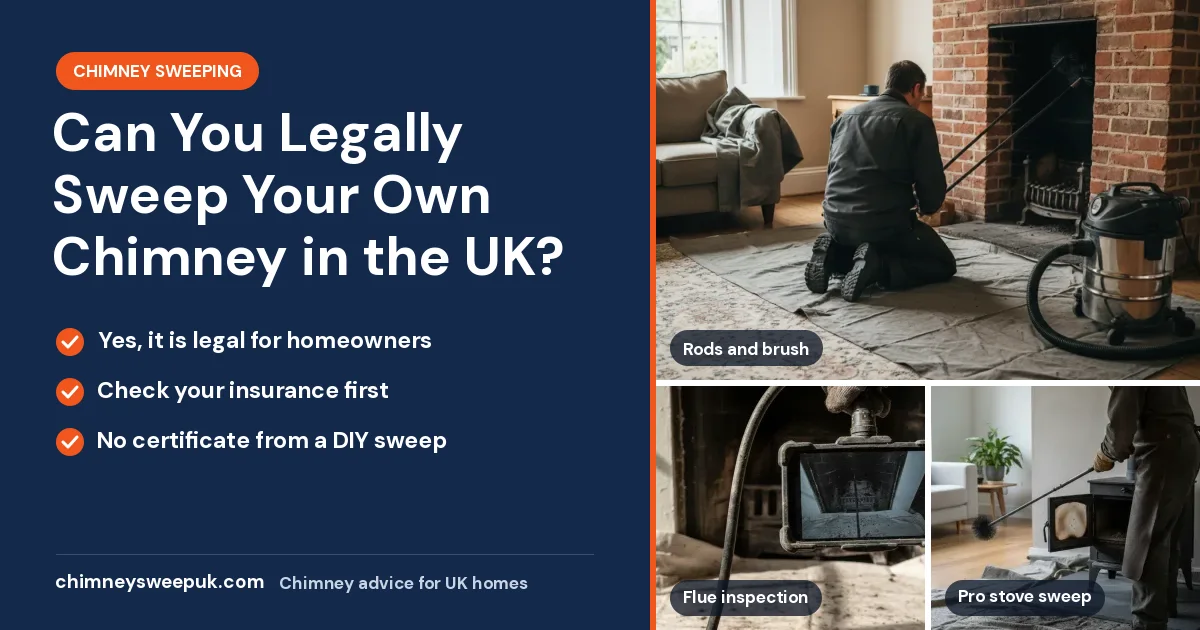
Generally, UK homeowners can sweep their own chimney; there is no general rule requiring every domestic chimney to be swept exclusively by a professional. However, that does not mean DIY sweeping is appropriate for every installation or that it will satisfy every insurance policy.
Before starting, check three things:
- Your home insurance: Your policy may require regular sweeping by a competent or qualified professional, or evidence of maintenance.
- Your chimney type: A straight, accessible flue is different from a lined chimney with bends, a complicated log burner or a chimney showing signs of damage.
- Your ability and equipment: You need suitable tools and a safe method that will not damage the flue or spread soot throughout the property.
A DIY sweep will not provide you with a professional sweep certificate from a recognised chimney-sweeping organisation. If your insurer, landlord or another relevant party requires that evidence, a DIY clean may not meet the requirement.
HETAS recommends using an approved chimney sweep at least annually, depending on the appliance and fuel. UK fire services also advise using qualified professionals to inspect and maintain chimneys.
Pros and Cons of Sweeping Your Own Chimney
| Advantages of DIY sweeping | Disadvantages of DIY sweeping |
|---|---|
| You may save the cost of a professional visit | You must buy suitable brushes, rods and protective equipment |
| You can clean a simple flue at a convenient time | Soot and fine dust can spread through your home |
| You can carry out basic maintenance between professional visits | You may miss hidden deposits, obstructions or damage |
| You can become familiar with your appliance and chimney | Incorrect tools can damage a liner or other components |
| You may be able to remove loose soot from an accessible flue | You cannot issue yourself a recognised professional sweep certificate |
| You can inspect accessible parts of the fireplace | You may not be able to assess the whole flue or its performance |
The main advantage is potential cost savings. The main disadvantage is that removing soot is only part of maintaining a safe chimney.
HETAS’s chimney-sweeping code describes a more comprehensive process involving risk assessment, checking for restrictions, selecting suitable brushes, removing deposits, inspecting the flue after sweeping and checking that it draws adequately.
What Equipment Do You Need to Sweep Your Own Chimney?
If you decide to undertake a straightforward DIY sweep, you need equipment suitable for your specific chimney and appliance.
Common items include:
- A chimney brush of the correct type and diameter.
- Compatible chimney rods or an appropriate rotary cleaning system.
- Protective sheets to cover the floor and nearby furniture.
- A suitable dust mask or respirator, eye protection and gloves.
- Equipment to contain and collect soot without spreading it.
- A torch for examining accessible areas.
- The manufacturer’s instructions for your stove and flue system.
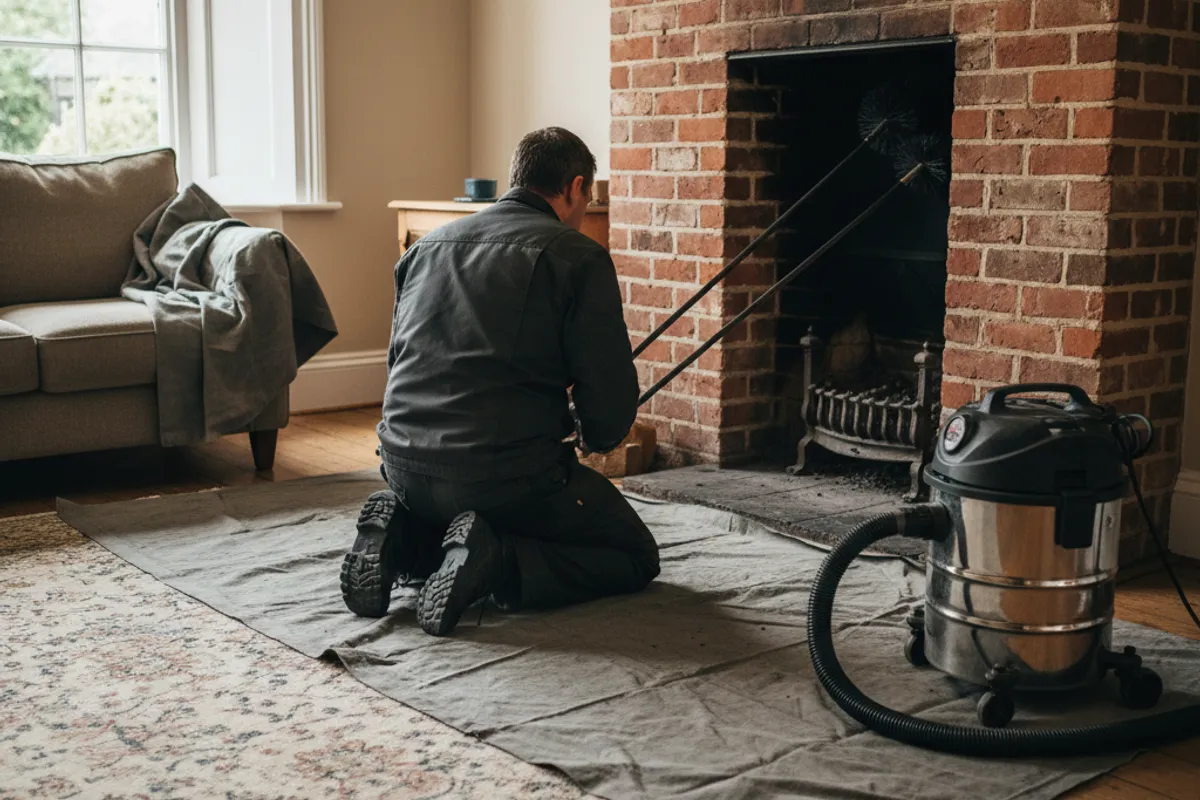
The correct brush matters. A tool that is too large, too small or unsuitable for the liner may clean poorly or cause damage. Do not assume that a metal brush is suitable for every chimney liner.
You should also avoid relying on chemical chimney-cleaning products or a domestic vacuum cleaner as a substitute for proper sweeping. The HETAS chimney-sweeping code does not regard vacuum-only or chemical-only cleaning as an acceptable replacement for a thorough sweep. Such methods may fail to remove obstructions such as bird nests, loose masonry or other debris.
How to Sweep Your Own Chimney Safely
The precise procedure depends on your fireplace, stove and flue design. Always follow the appliance and equipment manufacturers’ instructions. If you cannot identify the type of liner or the correct cleaning method, arrange a professional inspection instead.
1. Check Your Insurance and Chimney Type
Before buying equipment, check whether your policy requires a professional sweep or written evidence of cleaning.
Identify whether you have a traditional masonry chimney, a lined chimney, a metal flue system or a more complicated installation. If the flue is damaged, has sharp bends, contains a blockage or has not been inspected for years, do not assume that DIY cleaning is suitable.
2. Make Sure the Appliance Is Completely Cold
Never sweep a chimney while a fire is burning or when the appliance and flue remain hot. Allow the appliance to cool completely and ensure that no hot embers remain.
Remove loose ash only when it is safe to do so, following the manufacturer’s instructions.
3. Protect the Room Against Soot
Soot is extremely fine and can travel beyond the immediate fireplace. Cover flooring and furniture, and use suitable containment equipment to prevent debris escaping into the room.
Wear appropriate protective equipment. Avoid creating dust clouds or breathing in soot.
4. Use the Correct Brush and Cleaning Method
Use a brush and rods specifically suited to the flue material, diameter and design. Follow the equipment manufacturer’s directions and do not force a brush through a restriction.
Do not climb onto a roof or work at height unless you are appropriately trained and equipped. For most homeowners, attempting to sweep from the roof introduces unnecessary risks.
5. Collect the Debris Carefully
Remove soot and debris using suitable collection equipment. Do not use a normal household vacuum cleaner to collect potentially hot ash or to substitute for proper chimney-sweeping equipment.
If you discover a bird nest, loose bricks, a damaged liner or an unexpected obstruction, stop rather than trying to force it through the chimney.
6. Check for Obvious Problems
Look for accessible signs of cracks, damaged components, heavy tar-like deposits or soot around joints. These observations are not a substitute for a complete flue inspection.
If you cannot confirm that the flue is clear and undamaged, or you notice anything unusual, do not relight the appliance until a competent professional has assessed it.
The Biggest Risks of Sweeping Your Own Chimney
1. Missing Creosote and Stubborn Deposits
Not all chimney deposits are loose, dry soot. Creosote can form hard, tar-like or glazed deposits that are difficult to remove.
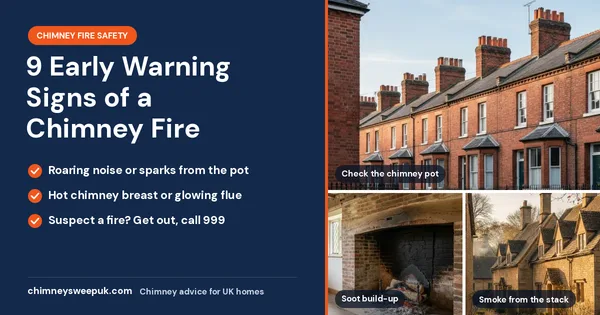
A brush may remove loose material while leaving stubborn deposits behind. If combustible deposits remain, the risk of a chimney fire may not be adequately reduced. Know the early warning signs of a chimney fire.
If you see shiny black deposits, heavy tar or material that does not come away with the correct cleaning equipment, stop and seek professional advice.
2. Damaging the Chimney Liner
Chimney liners come in different materials and designs. Using the wrong brush, applying excessive force or using unsuitable cleaning equipment can damage some systems.
Damage may not be obvious from the fireplace opening. A compromised liner can create serious safety problems, particularly if hot gases or combustion products escape into surrounding areas.
If you do not know what type of liner you have, consult the installer or a competent chimney professional.
3. Failing to Identify a Blockage
A chimney can contain more than soot. Bird nests, leaves, loose masonry and other debris can restrict the flue.
A basic brush may not remove the obstruction safely. Forcing material downwards could create a blockage elsewhere or damage the system.
If airflow is poor, smoke enters the room or the brush encounters an unexpected obstruction, stop using the appliance and arrange an inspection.
4. Spreading Soot Throughout Your House
DIY sweeping can be messy. Fine soot can settle on carpets, curtains, furniture and other surfaces if the fireplace opening is not adequately contained.
Professional sweeps use protective equipment and appropriate containment methods to manage the mess. Without suitable preparation, cleaning the room afterwards can become a substantial job.
5. Falling or Injuring Yourself
Some sweeping methods involve roof access or working at height. Slippery tiles, steep roofs and unstable ladders can cause serious injuries.
You should not climb onto the roof just to save the cost of a sweep. If safe access is not available, choose a professional who has suitable equipment and training.
6. Losing the Evidence Your Insurer Requires
If your insurance policy specifies professional chimney sweeping, a DIY clean may not satisfy its conditions.
That does not mean every insurer automatically rejects a chimney-fire claim after DIY sweeping. The outcome depends on the policy wording and circumstances. However, failing to meet a stated maintenance requirement can complicate a claim.
Read the relevant policy conditions before choosing DIY cleaning.
DIY Chimney Sweeping vs Hiring a Professional
| Factor | DIY chimney sweep | Professional chimney sweep |
|---|---|---|
| Upfront cost | Tools and protective equipment may be needed | Pay for a service visit |
| Cleaning quality | Depends on your skills, tools and flue design | Uses professional equipment and an established method |
| Inspection | Limited to what you can safely access and assess | Can carry out a more systematic inspection |
| Obstructions | May be difficult or unsafe to remove | Better equipped to assess and deal with many common obstructions |
| Chimney liner | Risk of using unsuitable equipment | Can assess visible defects and advise on further checks |
| Mess control | Depends on your containment setup | Typically uses dedicated containment equipment |
| Documentation | No professional sweep certificate | May provide a certificate or service record |
| Insurance | May not meet policy requirements | May meet requirements if the sweep has the credentials your insurer specifies |
A professional sweep is particularly worthwhile if you have recently moved into a property, inherited an old chimney, installed a new stove, experienced a chimney fire or noticed changes in how the appliance operates.
How Much Does a Professional Chimney Sweep Cost in the UK?
The cost depends on the location, chimney design, accessibility, appliance and condition of the flue. Additional work, such as removing a bird nest or dealing with heavy deposits, may cost extra.
For a typical UK homeowner, a straightforward professional sweep may cost roughly £70 to £110, although some jobs fall outside this range. This is an indicative guide rather than a guaranteed quotation; obtain local prices for your property. Use our chimney sweep cost calculator for an estimate.
| Service | What affects the cost |
|---|---|
| Standard chimney sweep | Chimney type, local rates and access |
| Log burner or wood-stove sweep | Flue design, deposits and appliance access |
| Blockage removal | Type and location of the obstruction |
| Inspection or additional testing | Whether further checks or specialist equipment are needed |
| Repairs | Extent of damage and replacement components |
DIY sweeping can look cheaper if you already own the correct tools. However, if you need to buy a brush, rods, protective equipment and containment materials, the savings may be smaller than expected.
The price should also be weighed against the value of professional inspection and any documentation required by your insurer.
How Often Should You Sweep Your Chimney?
The appropriate frequency depends on the fuel, appliance, amount of use and condition of the chimney.
HETAS recommends professional sweeping at least once a year, depending on the appliance and fuel. Some UK fire services and chimney-sweeping organisations recommend more frequent sweeping for wood-burning appliances, including quarterly while in use. Follow the advice appropriate to your installation and local guidance.
Do not wait for the chimney to smell smoky or for the stove to stop drawing properly before arranging maintenance.
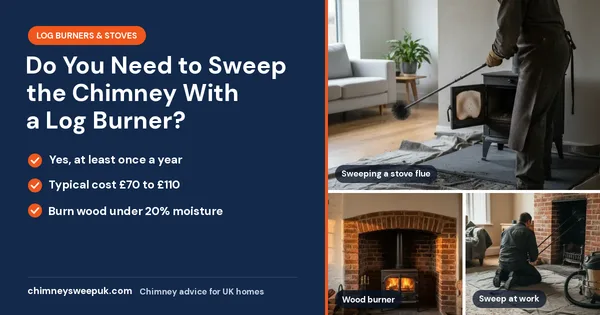
If you use your log burner frequently, burn fuel that produces heavy deposits, or notice a change in performance, ask a qualified sweep whether you need a shorter interval. See do you need to sweep the chimney with a log burner?
A DIY clean between professional visits may be possible for some homeowners, but it should not replace the inspection and maintenance your chimney requires.
When Should You Definitely Call a Professional?
DIY sweeping is not recommended as a substitute for professional assessment when:
- You have never had the chimney inspected and do not know its condition.
- You suspect a bird nest, blockage or loose masonry.
- You can see hard, shiny or tar-like deposits.
- Your chimney has bends or a complicated flue arrangement you cannot safely access.
- You suspect the liner is cracked or damaged.
- Smoke repeatedly enters the room.
- The chimney has experienced a fire or significant overheating.
- Your insurance policy requires professional sweeping.
- You cannot safely carry out the work using appropriate equipment.
If you suspect an active chimney fire, do not attempt to sweep or inspect the chimney. Get everyone out and call 999. When you need a professional, compare ranked chimney sweeps near you.
Frequently Asked Questions
Can I Sweep My Own Chimney with a Brush?
You may be able to sweep a straightforward chimney using a suitable brush and compatible rods. The equipment must match the flue, and you need a safe way to contain and remove soot. DIY brushing does not guarantee that the chimney is free from blockages, stubborn deposits or damage.
Can I Sweep a Log-Burner Chimney from Inside the House?
Some flues can be swept from the appliance opening using an appropriate method, but the correct procedure depends on the stove and flue design. Check the manufacturer’s instructions and do not dismantle components unless you know how to do so safely.
Can I Use a Domestic Vacuum Cleaner to Sweep My Chimney?
No. A normal household vacuum is not a substitute for proper chimney-sweeping equipment and may spread fine soot or be damaged by it. Never vacuum hot ash or embers. Use suitable professional equipment or hire a sweep.
Will DIY Chimney Sweeping Invalidate My Home Insurance?
Not automatically in every case. It depends on your policy wording and the circumstances. If your insurer requires a professional sweep or recognised certificate, DIY sweeping may not meet that condition. Check your policy before starting.
Does a Chimney Need Sweeping If I Hardly Use My Fireplace?
Yes, it may still need inspection and sweeping. Debris, leaves, bird nests and other obstructions can develop even when the fireplace is rarely used. Have the chimney checked before using it again after a prolonged period of inactivity.
Can I Sweep a Chimney After a Chimney Fire?
Do not rely on DIY sweeping after a chimney fire. The heat may have damaged the liner, masonry or nearby materials. Contact the fire service if the incident is ongoing, then arrange a competent professional inspection and any required repairs before using the appliance again.
Is DIY Chimney Sweeping Worth It?
It may be suitable for some simple, accessible chimneys when the homeowner has the correct equipment and understands its limitations. For many homeowners, professional sweeping offers better value because it combines cleaning with inspection, appropriate equipment and documentation where provided.
Final Verdict: Should You Sweep Your Own Chimney?
You may be able to sweep your own chimney, but the safest decision depends on the type and condition of your flue, your equipment and your insurance requirements.
DIY sweeping can save money on a straightforward job, but it can also leave stubborn deposits behind, miss an obstruction or fail to identify damage. A professional sweep can carry out a more systematic clean and assess whether the chimney needs further attention.
If you have a log burner that you use regularly, the sensible approach is to follow the recommended sweeping schedule, use suitable dry fuel, keep alarms working and arrange professional maintenance. If you are unsure whether your chimney is safe to clean yourself, choose a competent professional rather than taking a risk.