Do You Need to Sweep the Chimney With a Log Burner?
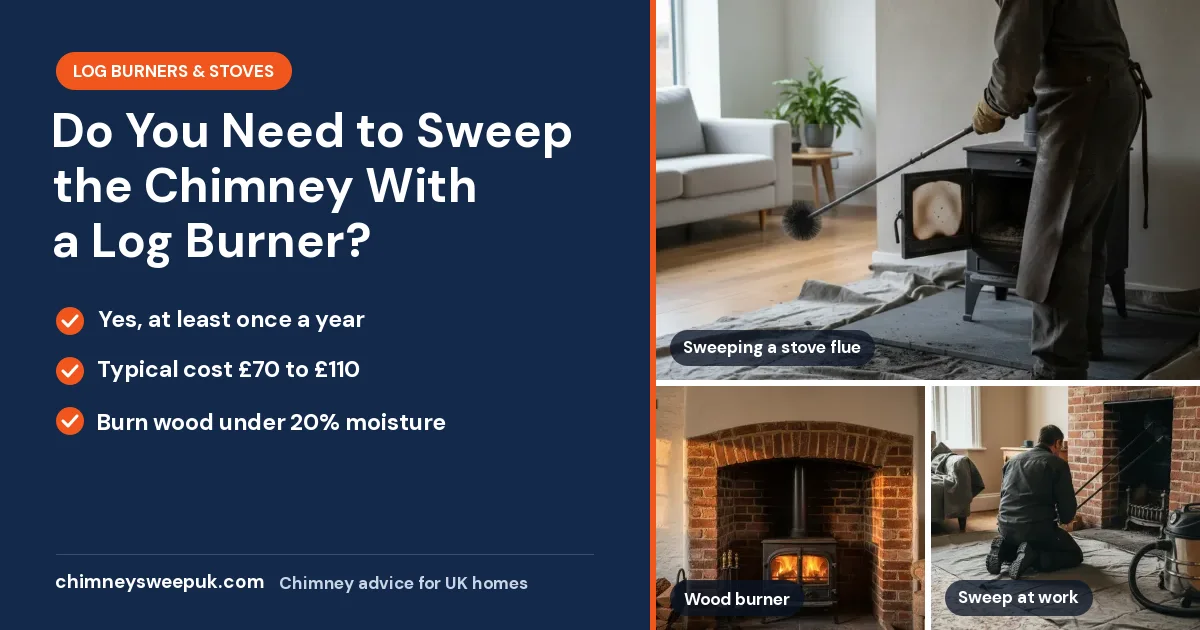
Yes, you need to have the chimney swept when you have a log burner. Even if your wood-burning stove has a modern flue liner, burns efficiently and produces very little visible smoke, soot and tar deposits can still accumulate inside the chimney.
Regular chimney sweeping helps remove combustible deposits, clear obstructions and reduce the risk of a chimney fire. It can also help identify problems before they become more serious.
For UK homeowners, HETAS and the government’s Burn Better campaign recommend professional chimney sweeping at least once a year. The right maintenance schedule can depend on the appliance, the fuel you burn and how frequently you use it. A chimney that is used heavily or develops deposits quickly may need more frequent attention.
This guide explains whether a wood burner needs a chimney sweep, how often to book one, how much it costs, what not to do with a log burner and the warning signs that your chimney needs attention.
Does a Wood Burner Need a Chimney Sweep?
Yes. A wood burner needs its chimney swept even if it is relatively new or has a stainless-steel flue liner.
When wood burns, it produces smoke, soot, water vapour and other combustion products. Some of these materials can condense on cooler parts of the flue, forming deposits that accumulate over time.
These deposits can restrict the passage of smoke and combustion gases. Some are combustible, meaning they can ignite if temperatures and conditions are suitable.
A clean-looking stove does not prove that the chimney is clean. Nor does a lack of visible smoke guarantee that the flue is free from deposits or obstructions.
A professional chimney sweep can remove accumulated material and check for obvious issues encountered during the work. If the sweep discovers signs of damage, a separate inspection or repair may be necessary.
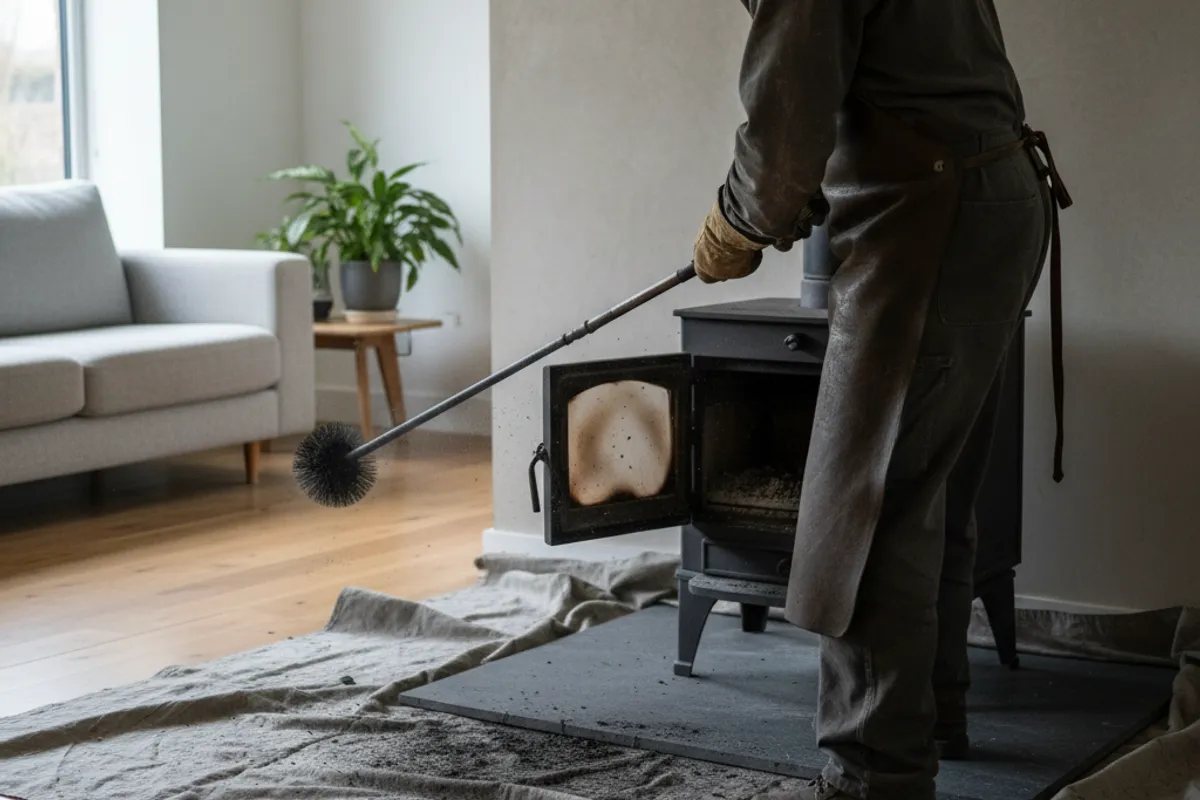
Why Does a Log Burner Produce Chimney Deposits?
Several factors influence the amount and type of deposits inside a chimney:
- Wet wood: Wood with excessive moisture produces more smoke and can contribute to tar deposits.
- Poor combustion: Running a stove in a way that produces persistent smoke can increase deposits.
- Frequent use: A stove used every evening throughout autumn and winter may accumulate deposits more quickly than one used occasionally.
- Incorrect fuel: Burning materials that are unsuitable for the appliance can damage the stove and chimney.
- Flue conditions: The design, temperature and condition of the flue influence how combustion products behave.
Using dry wood and operating the stove according to the manufacturer’s instructions can help reduce deposits. However, good burning habits do not eliminate the need for professional sweeping.
How Often Should You Clean a Chimney With a Log Burner?
For a typical UK home, a useful starting point is to have the chimney swept at least once a year. HETAS and the UK government’s Burn Better guidance recommend annual professional sweeping. The appropriate frequency can vary with the fuel used, appliance and amount of use.
| How you use your log burner | Maintenance approach |
|---|---|
| Occasional use | Arrange at least annual sweeping and follow professional advice |
| Regular winter use | Book an annual sweep and check whether your usage requires more frequent cleaning |
| Daily use throughout autumn and winter | Discuss a suitable schedule with a qualified sweep |
| Burning wood that may be damp | Address the fuel problem and arrange an inspection if deposits are suspected |
| Heavy tar deposits or recurring problems | Seek professional advice; a routine annual schedule may not be sufficient |
| New or recently lined chimney | Follow the installer and manufacturer’s advice; do not assume sweeping is unnecessary |
These are general recommendations, not a substitute for an assessment of your particular appliance.
Should You Sweep a Log Burner Chimney Once or Twice a Year?
Some homeowners will need only an annual sweep, while others may need more frequent cleaning. The answer depends on the fuel, the condition of the flue and how much the stove is used.
If you burn wood every day throughout winter, ask your sweep whether a second visit is appropriate. Do not automatically assume that every log burner requires exactly two sweeps per year, but do not ignore a recommendation for more frequent maintenance either.
When Is the Best Time to Get a Chimney Swept?
Many homeowners book a sweep in late summer or early autumn, before the first cold spell. This helps ensure that the chimney is ready before the stove is used regularly.
Booking ahead can also help you avoid the rush when temperatures fall and many households begin using their fires again.
Spring and summer can be convenient alternatives. If you use your stove heavily, arrange sweeping according to your maintenance schedule rather than waiting until the next heating season.
How Much Does It Cost to Have a Log Burner Chimney Swept?
A chimney sweep for a log burner in the UK typically costs around £70 to £110, although prices vary by location, chimney condition and the work included.
Checkatrade’s September 2026 cost guide puts the average wood-burner sweep at approximately £90. A straightforward lined stove flue may be cheaper than an unlined chimney or a flue that has not been cleaned for several years. For a full breakdown and a price calculator, see our chimney sweep cost guide.
| Chimney sweeping service | Indicative UK cost |
|---|---|
| Standard wood-burning stove sweep | £70 to £110 |
| Lined stove flue sweep | £70 to £100 |
| Unlined stove flue sweep | £85 to £125 |
| Standard open-fire sweep | £75 to £110 |
| Second flue during the same visit | Often £30 to £60 extra |
| Bird’s nest or difficult blockage removal | May cost £70 to £180 or more |
| CCTV chimney inspection | Approximately £50 to £175 extra |
These are guide prices, not guaranteed quotes. Additional work can increase the total, and contractors differ in what they include.
Why Does the Price of a Log Burner Chimney Sweep Vary?
The final cost can depend on:
- Whether the flue is lined or unlined.
- How long it has been since the last sweep.
- The amount and type of deposits.
- Whether there is a bird’s nest or another obstruction.
- The height and accessibility of the chimney.
- Your location and the contractor’s travel costs.
- Whether you need a separate inspection or repair.
When requesting a quote, explain the type of stove you have, when it was last swept and whether you have noticed smoke spillage, unusual smells or poor performance.
Ask whether the price includes sweeping, relevant checks and a written record or certificate. If a contractor recommends extra work, ask what they found and why it is needed before agreeing to additional charges.
What Happens If You Never Sweep a Log Burner Chimney?
Neglecting chimney maintenance can create several problems.
1. Increased Risk of a Chimney Fire
Soot and tar deposits can be combustible. If deposits ignite, a chimney fire can develop inside the flue and potentially spread to surrounding parts of the building.
A chimney fire may produce a loud roaring sound, intense heat, sparks or flames from the chimney pot. However, not every chimney fire is obvious from inside the house. Learn the early warning signs of a chimney fire.
If you suspect a chimney fire, stop adding fuel, leave the building if there is immediate danger, call 999 and follow the fire service’s instructions. Do not attempt to inspect or tackle the fire yourself.
2. Restricted Flue and Poor Smoke Removal
A chimney must allow combustion gases to escape safely. Soot, nests and other debris can restrict the passage of smoke, potentially causing poor draught or smoke to enter the room.
If smoke repeatedly comes back into the living space, stop using the stove until the cause has been investigated. Possible causes include a blockage, ventilation problem, unsuitable flue conditions or a defect in the installation.
3. More Difficult and Expensive Cleaning
A flue that is maintained regularly may be easier to sweep than one with heavy, hardened deposits. Neglect can mean extra work or a need for specialist assessment.
A routine sweep is not a guarantee against every chimney problem, but it can help identify issues before they become more complicated.
4. Potential Damage to the Chimney or Stove
Heavy deposits and poor burning practices can affect the appliance and flue. If the chimney lining is damaged or a component fails, sweeping alone will not resolve the underlying problem.
A professional may recommend a separate inspection, camera survey or repair if there are signs of deterioration.
What Not to Do With a Log Burner
Safe operation matters just as much as regular sweeping. Avoid these common mistakes.
Do Not Burn Wet Wood
Wet wood produces more smoke and can increase tar deposits in the chimney. In England, wood sold in volumes below 2m³ for domestic burning must meet the applicable moisture-content rules and carry the Ready to Burn certification.
As a general guide, use wood with a moisture content of 20% or less. If you source your own logs, store and season them appropriately and check them with a moisture meter where possible.
Do Not Burn Treated Wood or Household Rubbish
Do not burn painted, stained or chemically treated wood, old furniture, MDF or unsuitable household waste. These materials can release harmful pollutants and may damage the appliance.
Use only fuels approved for your stove, following the manufacturer’s instructions and any local smoke-control requirements.
Do Not Leave the Stove Door Open Unless the Appliance Is Designed for It
A log burner is designed to operate according to its manufacturer’s instructions. Leaving the door open when it should be closed can alter combustion and increase the risk of sparks or smoke escaping.
Do Not Overload the Stove
Adding too much fuel can cause overheating and may damage the appliance or flue. Follow the manufacturer’s loading instructions and recommended operating range.
Do Not Close the Air Controls Too Far to Make the Logs Last Longer
Operating a stove with insufficient air can lead to incomplete combustion, increased smoke and more deposits. Use the air controls as directed for your appliance and fuel.
Do Not Ignore a Carbon Monoxide Alarm
Solid-fuel appliances can produce carbon monoxide if combustion or ventilation is faulty. Install and maintain a suitable carbon monoxide alarm in accordance with the relevant guidance and manufacturer’s instructions.
If the alarm sounds, leave the property and call the appropriate emergency service. Do not re-enter until it is safe.
Do Not Assume a Clean Stove Means a Clean Chimney
You can clean the stove glass and remove ash as part of routine maintenance, but these tasks do not replace professional chimney sweeping.
How Do You Know When a Log Burner Chimney Needs Sweeping?
An annual sweep should not be delayed just because you cannot see a problem. However, certain signs suggest that your chimney needs prompt attention.
Look out for:
- Smoke entering the room when the stove is operating.
- A persistent tar-like or smoky smell.
- Soot or debris falling into the stove.
- A noticeable change in the stove’s draught or performance.
- Visible soot or deposits around accessible parts of the flue.
- Evidence of a bird’s nest or another obstruction.
- A chimney fire or suspected overheating event.
These signs do not all mean the same thing. Smoke spillage, for example, can have several causes, while a tar smell may indicate deposits or another issue that requires investigation.
If you suspect a blockage or flue defect, stop using the stove until it has been assessed by a suitably qualified professional.
Does a New Log Burner or Chimney Liner Still Need Sweeping?
Yes. A new stove and a modern flue liner still require appropriate maintenance.
A liner helps form a suitable passage for combustion gases, but it does not prevent all soot or tar from accumulating. Nor does a liner guarantee that the flue cannot become obstructed.
If you have recently installed a log burner, follow the installer’s guidance and the manufacturer’s maintenance instructions. If you have replaced an open fire with a stove or installed a new liner, ask the installer when the first sweep should take place.
Do not assume a new installation can go several years without inspection simply because it has not been used for long.
Should You Sweep a Log Burner Chimney Yourself?
Some people use DIY chimney-sweeping rods and brushes, but professional sweeping is the safer option if you are unsure about the chimney’s construction, condition or the correct equipment. We cover the risks in detail in can you sweep your own chimney?
A professional sweep can select appropriate tools, protect the room from soot and assess visible concerns during the work. They may also identify a need for a more detailed inspection.
DIY work can be particularly risky if it involves climbing onto a roof, working at height or attempting to clear an unknown obstruction. Never continue using a chimney if you suspect it is blocked or damaged.
When choosing a contractor, look for a suitably qualified professional. HETAS provides a search tool for approved chimney sweeps and other solid-fuel specialists, and you can compare ranked local chimney sweeps on our directory.
Common Questions About Sweeping a Log Burner Chimney
Does a Wood Burner Need a Chimney Sweep Every Year?
At least annual professional sweeping is the standard UK recommendation from HETAS and the government’s Burn Better guidance. Some installations or usage patterns may require more frequent attention.
Can I Use My Log Burner If the Chimney Has Not Been Swept?
If the chimney is overdue, blocked or of unknown condition, arrange a professional assessment before use. Do not use the stove if there are signs of smoke spillage, a blockage, flue damage or a previous chimney fire until the problem has been checked.
Does Burning Dry Wood Mean I Do Not Need a Chimney Sweep?
No. Dry wood generally produces less smoke and tar than wet wood, but deposits can still accumulate. Good fuel choice reduces problems; it does not replace sweeping.
How Long Does It Take to Sweep a Log Burner Chimney?
A straightforward single-flue sweep may take around 45 to 60 minutes. A difficult flue, multiple chimneys, heavy deposits or a blockage can make the appointment longer.
Does a Chimney Sweep Issue a Certificate?
Many professional sweeps provide a written record or certificate, but the exact documentation varies. Ask before booking, especially if your insurer or another party requires evidence of maintenance.
Do I Need to Sweep a Chimney If I Rarely Use the Log Burner?
Regular use affects the amount of deposits, but infrequent use does not guarantee that the chimney is clear. Birds or debris may enter while the appliance is not in use, and an annual sweep remains a sensible starting point.
Should I Book a Sweep Before Winter?
Yes, it is sensible to book before you start using the stove regularly. Late summer and early autumn are popular times, so arranging an appointment in advance can help avoid delays.
Final Verdict: Do You Need to Sweep the Chimney With a Log Burner?
Yes. A log burner needs regular chimney sweeping, even if it is modern, rarely used or fitted with a liner. Soot and tar can accumulate inside the flue, and obstructions or defects can affect how safely combustion gases escape.
For most UK households, arrange professional sweeping at least once a year and follow any additional advice based on your appliance, fuel and frequency of use. Budget approximately £70 to £110 for a standard wood-burner chimney sweep, while recognising that complex work can cost more.
Use dry, suitable fuel, operate the stove according to its instructions, maintain the appliance and never ignore smoke spillage or a suspected blockage.