How to Become a Chimney Sweep in the UK: Training, Costs and Qualifications
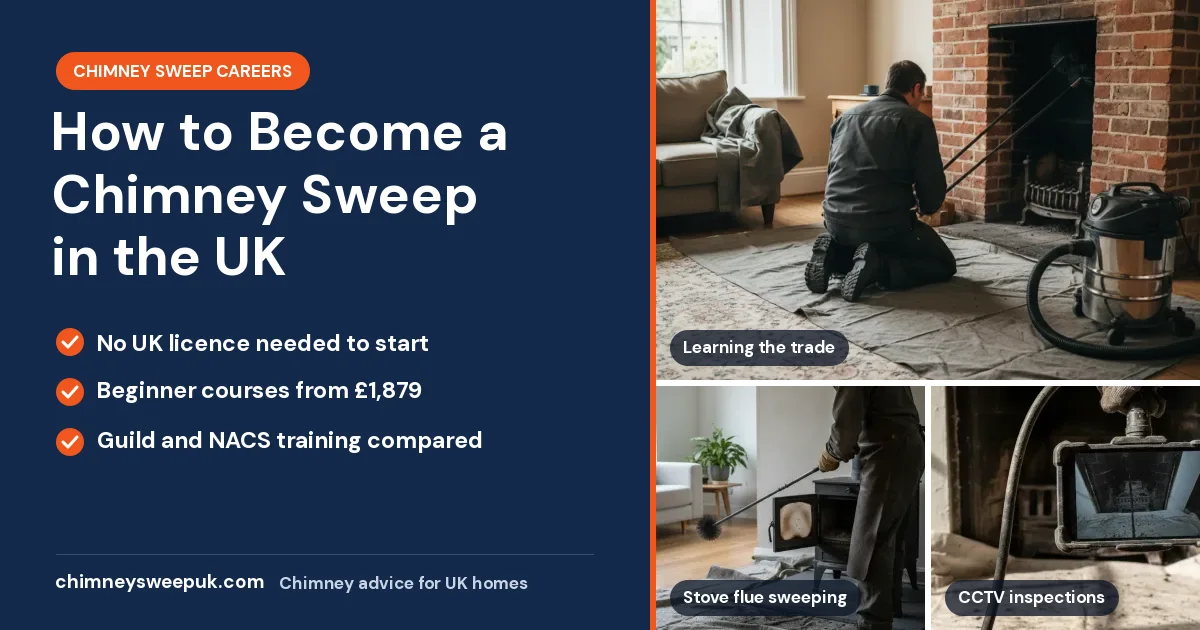
Becoming a chimney sweep in the UK can be a practical career choice for people who enjoy hands-on work and want the option of running their own business. Chimney sweeps help homeowners maintain open fireplaces, log burners, wood-burning stoves and other solid-fuel appliances by removing soot and deposits, checking for obstructions and identifying potential safety problems.
You do not necessarily need years of previous trade experience to get started. Professional organisations offer training programmes for beginners, including practical instruction, assessments and opportunities to learn alongside experienced chimney sweeps.
However, completing a short course is only one part of starting a successful chimney-sweeping business. You also need suitable equipment, insurance, technical knowledge, a reliable vehicle and a way to attract customers.
The most straightforward route is to complete recognised practical training, gain supervised experience, arrange appropriate insurance and build your business around safe, competent work.
This guide explains how to become a chimney sweep in the UK, which training providers to consider, how much courses cost, whether qualifications are legally required, and what you need to start working independently.
1. Do You Need Qualifications to Become a Chimney Sweep in the UK?
Chimney sweeping is not generally subject to a universal statutory licensing requirement across the UK in the same way that certain regulated professions are. However, that does not mean you can safely begin offering professional services without training.
A chimney sweep needs to understand different chimney designs, flue liners, sweeping equipment, soot and creosote deposits, ventilation, blockages and common defects.
You also need to know when a problem is beyond the scope of routine sweeping and requires specialist inspection or repair.
Although a formal qualification may not be legally compulsory for every domestic sweeping job, professional training and membership of a recognised trade association can help demonstrate competence to customers, insurers and other businesses.
Two established organisations to investigate are:
- The Guild of Master Chimney Sweeps: Offers a structured training programme for beginners, including classroom and practical training, supervised on-site experience and assessment.
- The National Association of Chimney Sweeps (NACS): Offers professional chimney-sweeping training covering manual and rotary sweeping techniques, inspections, flues, ventilation and related safety topics.
Both organisations publish information about their training and membership requirements. Compare the full programme, assessment requirements, ongoing support and total cost before choosing.
2. How to Become a Chimney Sweep Step by Step
If you are starting from scratch, the following route provides a sensible structure.
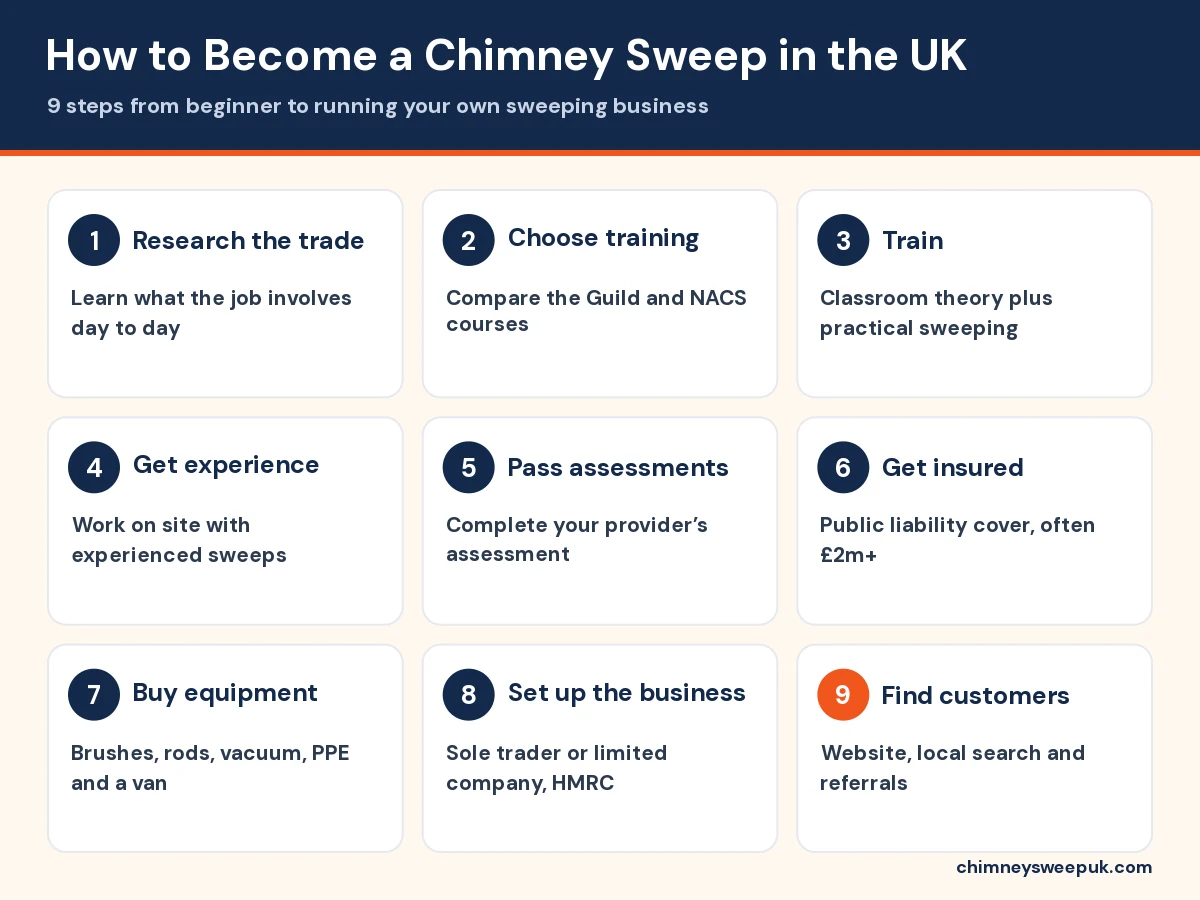
| Step | What you need to do |
|---|---|
| 1 | Research the chimney-sweeping trade and the work involved |
| 2 | Choose a reputable training provider |
| 3 | Complete theoretical and practical training |
| 4 | Gain supervised, hands-on experience |
| 5 | Complete the required assessments |
| 6 | Arrange suitable business and public liability insurance |
| 7 | Purchase the necessary equipment and arrange transport |
| 8 | Set up your business and customer records |
| 9 | Start marketing locally and building a customer base |
The exact sequence varies by training provider. Some programmes combine initial training, supervised work and assessment into a structured pathway, so check the provider’s current requirements before enrolling.
Step 1: Understand the Job
Chimney sweeping involves more than pushing a brush through a chimney.
Depending on the job, your responsibilities may include protecting the customer’s home from soot, selecting appropriate tools, removing deposits, checking accessible parts of the flue, identifying obstructions and documenting defects or recommendations.
You will also need good communication skills. Customers may ask why their stove is smoking, whether a chimney is safe to use, or whether a damaged component needs further inspection. Knowing the early warning signs of a chimney fire helps you explain risks clearly.
A competent sweep must know the limits of their expertise and avoid claiming that a chimney is safe when further investigation is necessary.
Step 2: Choose Professional Training
Look for a course that includes practical sweeping, different appliance and chimney types, safety procedures, equipment selection, fault identification and an assessment of your ability to perform the work.
Do not choose a course solely because it is cheap or advertised as an online qualification. Practical experience is particularly important in a trade where incorrect equipment or poor technique can damage a flue or leave dangerous deposits behind.
Step 3: Gain Experience
Supervised work helps you learn how to handle different chimney configurations and real customer situations.
It also teaches you how to manage soot containment, work efficiently, communicate defects and organise appointments. These are skills that are difficult to develop through online lessons alone.
Step 4: Complete the Assessments
Follow your provider’s assessment pathway and make sure you understand what qualification or membership status you receive at the end.
A training certificate, a professional association membership and a nationally recognised vocational qualification are not necessarily the same thing. Ask what each document proves and whether any additional assessment is required.
3. Best Chimney Sweep Training Courses in the UK
Two useful starting points for beginners are the Guild of Master Chimney Sweeps and NACS. Their programmes differ in structure, assessment and pricing, so compare them before making a decision.
Option A: The Guild of Master Chimney Sweeps
The Guild offers its Masterful Sweep training programme for people who are new to chimney sweeping.
The programme includes:
- Four days of intensive theoretical and practical training at a training centre.
- A minimum of four days accompanying experienced chimney sweeps on site.
- Practical and theoretical assessments.
- Ongoing technical guidance and mentoring.
- An opportunity to pursue the Guild’s pathway towards an NVQ chimney-sweep qualification.
The Guild’s published price for the training and on-site training component is £1,800 including VAT, with a further £450 including VAT for the final assessment package. That makes the advertised combined cost approximately £2,250, before any additional expenses such as travel, accommodation or equipment not included in the package.
Check the current price, course dates and inclusions directly with the provider before booking.
Official website: Guild of Master Chimney Sweeps training
Option B: National Association of Chimney Sweeps (NACS)
NACS provides training through its National Chimney Training Centre in Stone, Staffordshire.
Its advertised chimney-sweep course with CCTV training, inspections and surveys includes:
- Four days of training at the centre.
- A separate on-site assessment day.
- Training in manual and rotary sweeping techniques.
- Instruction covering flues, ventilation, chimney designs and equipment.
- Training related to CCTV inspection, health and safety, and fault identification.
- Course documentation and assessment requirements.
The published price for this course is £1,879 including VAT. The provider’s page states that no previous chimney-sweeping experience is required, although candidates need basic literacy and numeracy skills and must complete the specified practical and assessment requirements.
Confirm the current price, membership conditions and any additional costs directly with NACS.
Official website: NACS chimney sweep training
Which Training Course Should You Choose?
| Comparison | Guild of Master Chimney Sweeps | NACS |
|---|---|---|
| Suitable for beginners | Yes | Yes |
| Practical training | Yes | Yes |
| Supervised or assessed practical work | Yes | Yes |
| Published course cost | About £2,250 for the listed training and final assessment components | About £1,879 for the advertised course |
| Additional learning | Mentoring and further technical courses | Further training and member support |
| What to check | Membership, assessment and equipment requirements | Membership, assessment and equipment requirements |
These are advertised programme prices, not a guarantee that all startup expenses are included. Confirm the complete cost before committing.
4. Can You Become a Chimney Sweep Online?
You can study some chimney-sweeping theory online, and professional organisations offer online refresher training for existing sweeps. However, an online-only course is not the best preparation for someone who has never swept a chimney professionally.
You need to learn how different brushes and rods behave, how to protect a customer’s property, how to identify common problems and how to carry out a thorough sweep.
For example, the Guild’s beginner programme includes four days of centre-based training and a minimum of four days of on-site experience. NACS also offers a practical course with an assessment component.
If you want to study online before enrolling, use it to familiarise yourself with chimney construction, common appliance types, fuel-related deposits, ventilation and safety procedures. Treat that preparation as a supplement to practical training rather than a substitute.
5. How Much Does Chimney Sweep Training Cost in the UK?
Training is only one part of the investment required to start working professionally.
The following table separates published course fees from other startup expenses.
| Expense | Indicative budget |
|---|---|
| Professional training and assessment | Approximately £1,879 to £2,250 for the examples above |
| Brushes, rods and sweeping equipment | Obtain quotes based on the flues you intend to service |
| Protective clothing and PPE | Depends on equipment and required protection |
| Soot containment and cleaning equipment | Depends on the chosen setup |
| Suitable vehicle or van | Highly variable; an existing suitable vehicle may reduce costs |
| Business insurance | Obtain quotes based on the work and cover required |
| Business website and marketing | Depends on whether you build it yourself or pay a provider |
| Travel and accommodation for training | Depends on your location and course venue |
There is no single reliable startup cost for every new sweep. A person who already owns a suitable van will have a different budget from someone who needs to buy a vehicle as well as tools.
Before paying for a course, request an itemised list of equipment and any other costs required to complete the assessment and begin trading.
6. What Equipment Does a Chimney Sweep Need?
A professional chimney sweep needs equipment suited to the types of chimney and appliance they intend to service.
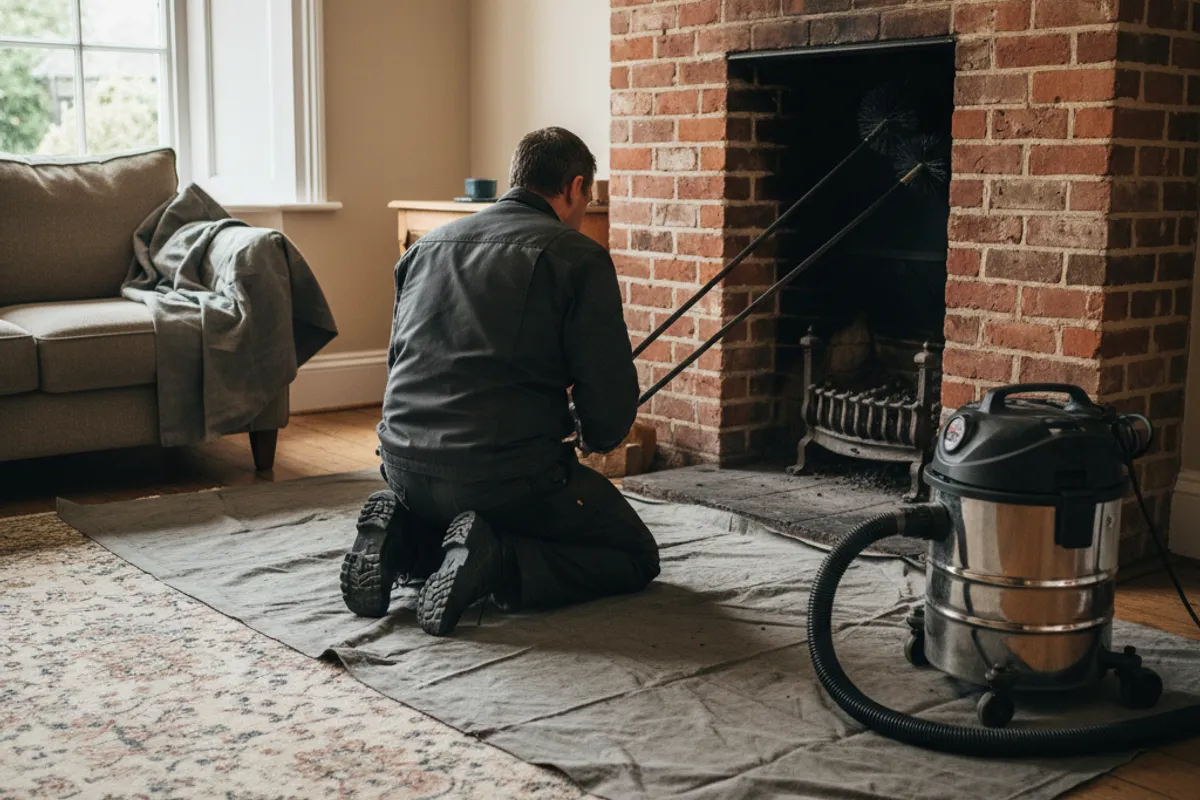
Common equipment includes:
- Chimney brushes in appropriate sizes and materials.
- Compatible rods and, where suitable, rotary sweeping equipment.
- Professional soot containment and vacuum equipment.
- Protective sheets and tools for keeping the customer’s home clean.
- Suitable workwear, gloves, eye protection and respiratory protection.
- Lighting and inspection equipment.
- Warning notices and a system for providing service records or sweeping certificates where appropriate.
You should not assume that every brush is suitable for every liner. Using the wrong equipment or applying excessive force can damage some flue systems. Our guide to sweeping your own chimney explains why the right brush matters.
Training providers can supply an equipment list for their course and assessment. Use that list as a starting point, then choose tools based on the actual work you are qualified and insured to perform.
7. Do You Need Insurance to Become a Chimney Sweep?
Insurance is an important consideration before you start working at customers’ homes.
Public liability insurance can help protect a business against certain claims involving injury or property damage, subject to the policy terms. Other forms of cover may be relevant depending on whether you own a van, employ staff, store equipment or provide additional services.
Before buying a policy, explain your actual work to the insurer. Make sure the cover includes the sweeping methods, appliances and services you intend to offer.
You should also check the requirements of your chosen professional association. For example, the Guild’s published training pathway specifies a minimum of £2 million in public liability insurance before its final assessment, alongside equipment requirements. Do not assume that the same threshold applies to every provider or every business.
Keep copies of your insurance documents and renew the cover on time. If a customer asks for proof of insurance or professional membership, you should be able to provide accurate documentation.
8. How to Start a Chimney-Sweeping Business in the UK
Many people enter the trade because they want to become self-employed rather than work for an existing company.
Once you have suitable training, experience, equipment and insurance, you can begin setting up the business.
Choose a Business Structure
Many small service businesses begin as sole traders because the structure is relatively straightforward. Others choose to operate through a limited company.
The right choice depends on your circumstances, finances and attitude to risk. GOV.UK explains the responsibilities associated with each structure, including tax reporting and record-keeping.
Official guide: Set up as a sole trader on GOV.UK
Register with HMRC Where Required
If you operate as a sole trader, GOV.UK states that you generally need to register for Self Assessment if your gross trading income exceeds £1,000 in a tax year, subject to the applicable rules and exceptions.
Keep records of your income and business expenses, and check whether other tax requirements apply to you.
Build a Local Customer Base
Start by deciding which towns and neighbourhoods you can serve reliably. A local business can attract customers through recommendations, a professional website, local search results and relationships with relevant tradespeople.
Useful customer groups may include homeowners with log burners, landlords, holiday-let operators and property managers. Make sure your marketing accurately reflects your training, membership and services.
You can also consider joining a recognised association that offers a member directory or other business support. Once you are trading, you can add your business to Chimney Sweep UK so local homeowners can find you.
Keep Records for Every Job
Use a consistent process for booking appointments, documenting the work completed, noting defects and giving customers appropriate service records.
If you identify a dangerous defect or an issue outside your expertise, explain the concern and recommend the appropriate next step. Do not describe a chimney as safe merely because you have completed a sweep.
9. How Much Can a Chimney Sweep Earn in the UK?
Earnings depend on the number of jobs you complete, your service prices, local demand, travel time, seasonality and business costs.
A self-employed chimney sweep’s revenue is not the same as take-home pay. You must account for fuel, vehicle costs, equipment, insurance, training, advertising, administration, tax and time spent travelling between jobs.
For example, if you charged an illustrative average of £80 per job and completed four paid jobs per working day, your daily revenue would be £320 before expenses and tax. See our chimney sweep cost guide for what customers typically pay across the UK.
That is an example of turnover, not a claim about typical earnings. In practice, the number of jobs you can complete depends on appointment length, distances, the condition of the chimney and the complexity of the work.
Demand can also be seasonal. Many households arrange sweeping before or during the heating season, so a new business should plan for quieter periods rather than assuming the busiest months will continue all year.
Before relying on chimney sweeping as your main income, research local competitors, typical service prices, travel distances and the number of customers you could realistically serve. Browsing the chimney sweeps listed in your area is a quick way to gauge local competition.
10. Is Chimney Sweeping a Good Career in the UK?
Chimney sweeping may suit someone who wants practical work, independence and the opportunity to develop a local service business.
Potential advantages include the option of self-employment, relatively focused training compared with some longer trades and the ability to develop additional expertise over time.
However, the work can be physically demanding and messy. You may need to work in cramped areas, handle soot and deposits, manage difficult access and deal with customers who have urgent concerns about their appliances.
Running a business also means handling appointments, cancellations, vehicle maintenance, insurance renewals, marketing and tax administration.
The best way to judge whether the career suits you is to speak to practising sweeps, compare training options and understand the physical and business demands before investing in equipment.
Frequently Asked Questions
How Long Does It Take to Become a Chimney Sweep?
A structured beginner programme may include four days of centre-based training, at least four days of supervised work and a separate assessment. The Guild’s published pathway follows this structure. The overall time to become established will depend on course availability, assessments and how quickly you gain experience.
Do I Need a Degree to Become a Chimney Sweep?
No university degree is normally required for the training routes described by the Guild and NACS. You should, however, complete appropriate professional training and meet the provider’s assessment requirements.
Can I Become a Chimney Sweep with No Experience?
Yes. Both the Guild and NACS advertise training options for beginners. You should still expect practical learning and assessment rather than relying on online information alone.
Is HETAS the Same as a Chimney-Sweeping Association?
No. HETAS is associated with the safe use, installation and servicing of solid-fuel appliances and related industry standards. The Guild of Master Chimney Sweeps and NACS provide dedicated chimney-sweeping training and membership pathways. Check which organisation and credential are relevant to the work you intend to perform.
Can I Become Self-Employed Straight After Training?
You can plan to operate your own business after completing the relevant training and meeting the requirements of your chosen membership or assessment route. Before accepting jobs, ensure you are competent, properly insured, equipped and able to meet any applicable customer, association and legal requirements.
Do Chimney Sweeps Need an NVQ?
An NVQ is not universally required for every domestic chimney-sweeping job. However, the Guild offers a pathway towards an NVQ chimney-sweep qualification, and additional qualifications may be useful for demonstrating competence or expanding your career. Ask your training provider what qualification you will receive and whether further assessment is available.
Final Thoughts
To become a chimney sweep in the UK, start by researching professional training programmes from the Guild of Master Chimney Sweeps and NACS. Compare the cost, practical training, supervised experience, assessment requirements and ongoing support before enrolling.
Then build your experience, arrange suitable insurance, purchase the right equipment and establish a business process that prioritises safety and good customer service.
You do not necessarily need years of previous experience to enter the trade, but becoming a competent professional takes more than completing a short course. Practical experience, continuing learning and responsible work are what help you build a sustainable chimney-sweeping career.