Early Warning Signs of a Chimney Fire: 9 Signs to Watch For
A chimney fire can start inside your chimney or flue without immediately producing obvious flames in your living room. If you use a log burner, wood-burning stove or open fireplace, recognising the early warning signs can help you act quickly and reduce the risk of a fire spreading into your home.
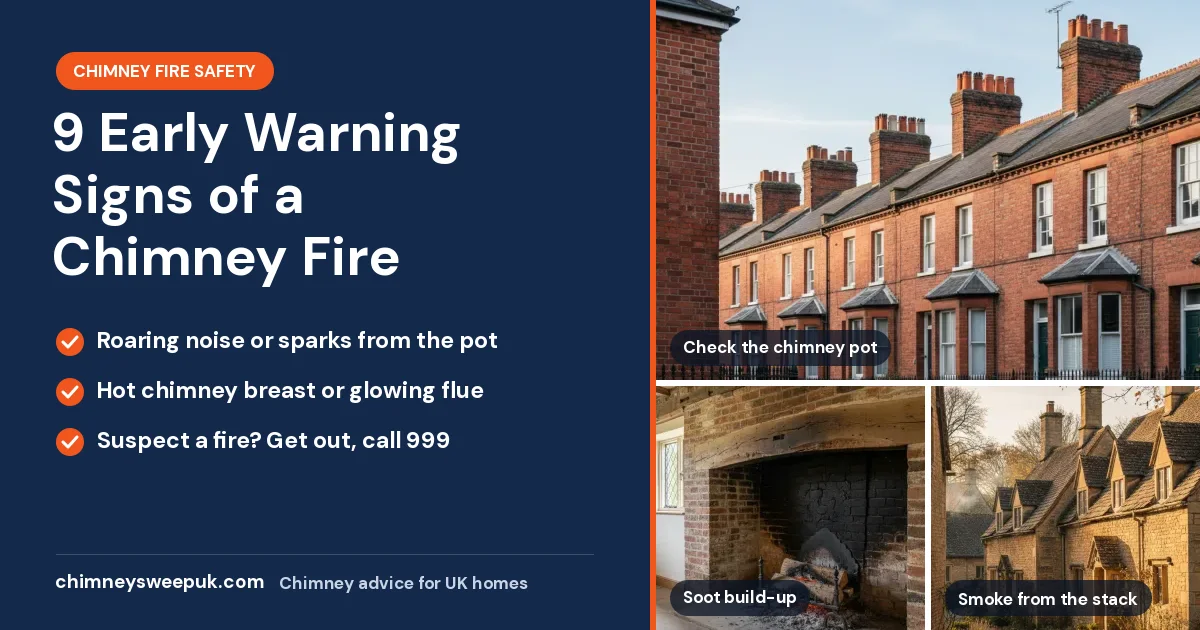
The most recognisable signs of a chimney fire include a loud roaring or rumbling sound, sparks or flames shooting from the chimney pot, excessive smoke, and a chimney breast or flue pipe becoming unusually hot. You may also notice burning soot falling into the fireplace, smoke entering other rooms, or a glowing stove pipe.
This guide explains nine warning signs, how to distinguish a potential chimney fire from a chimney that needs cleaning, what to do in an emergency, and how to reduce the risk of another fire.
What Are the Early Warning Signs of a Chimney Fire?
The following table summarises the main signs to recognise.
| Warning sign | What it may indicate | What to do |
|---|---|---|
| Loud roaring or rumbling in the chimney | Possible active chimney fire | Evacuate and call 999 |
| Sparks or flames coming from the chimney top | Burning deposits or embers inside the flue | Evacuate and call 999 |
| Chimney breast or flue pipe becoming extremely hot | Dangerous heat transfer through the chimney structure | Evacuate and call 999 if a fire is suspected |
| Excessive smoke or smoke entering other rooms | A fire, blockage or serious flue problem | Treat sudden smoke or smoke with other fire signs as an emergency |
| Glowing or shimmering stove pipe | Potentially excessive flue temperature or an active fire | Leave and call 999 if a chimney fire is suspected |
| Soot or burning debris falling into the fireplace | Deposits may be burning or breaking away | If accompanied by fire signs, evacuate; otherwise stop using the appliance and arrange inspection |
| Flames visible through cracks in the flue connector | Possible fire escaping from the flue system | Evacuate and call 999 |
| Unusual vibration of the stove or flue | Possible intense airflow and combustion in the chimney | Treat as an emergency when a chimney fire is suspected |
| Smoke or burning smells in the loft or adjoining rooms | Possible smoke leakage or fire spreading beyond the flue | Evacuate if a fire is suspected and call 999 |
These are recognised warning signs described by fire and rescue services, including Greater Manchester Fire and Rescue Service and Cleveland Fire Brigade. However, a chimney fire does not always produce every sign listed above. Never assume you are safe simply because you cannot see flames.
1. A Loud Roaring or Rumbling Noise in the Chimney
One of the clearest warning signs of a chimney fire is an unusually loud roaring noise coming from the chimney or flue.
A normal wood-burning stove produces some sound as air moves through the appliance and fuel burns. A chimney fire, however, may produce a much louder, more intense rushing, roaring or rumbling sound.
This can happen when combustible deposits inside the flue ignite and the fire draws a large amount of air through the chimney.
You might hear the noise above the stove, inside the chimney breast or from another room. It may sound like a powerful wind rushing through a pipe, even when the weather outside is calm.
What Should You Do If Your Chimney Is Roaring?
Do not climb onto the roof or attempt to inspect the chimney from close range. Do not wait to see whether the noise stops.
If you suspect a chimney fire:
- Get everyone out of the property.
- Call 999 and ask for the fire service.
- Stay outside and follow the emergency operator’s instructions.
- Do not use the fireplace or log burner again until it has been professionally inspected.
A roaring noise is not proof on its own that a chimney is burning, but a sudden, intense roaring sound during or after a fire should be treated seriously.
2. Sparks or Flames Shooting From the Chimney Pot
Another major warning sign is seeing sparks, glowing embers or flames coming out of the top of the chimney.
A small amount of visible smoke from a chimney can be normal when burning solid fuel. Flames or a shower of sparks shooting from the chimney pot are different and can indicate burning deposits or embers being carried upwards.
The display may resemble fireworks, with bright sparks rising above the roofline. Flames may also be visible at the chimney opening.
This is particularly concerning because sparks can ignite nearby combustible materials, including dry vegetation, roofing materials or thatch.
Does Smoke Coming Out of a Chimney Mean It Is on Fire?
Not necessarily. Smoke is a normal by-product of burning wood, and its appearance varies according to the fuel, appliance and burning conditions.
However, visible flames or a shower of sparks from the chimney top should be treated as an emergency, especially if accompanied by roaring, excessive heat or smoke inside the house.
Do not go outside to investigate from beneath the chimney or attempt to extinguish a fire on the roof. Get everyone out and call 999.
3. The Chimney Breast or Flue Pipe Becomes Unusually Hot
A chimney breast is the section of wall that surrounds or contains the chimney. During normal use, some warmth around a fireplace or stove can be expected.
The concern is when the chimney breast, flue pipe or adjoining walls become exceptionally hot, particularly if the temperature rises suddenly or the heat spreads to rooms above the fireplace.
A chimney fire can generate intense temperatures inside the flue. That heat may transfer through the chimney structure and potentially ignite nearby combustible materials, such as timber in a roof space.
Which Areas Should You Be Concerned About?
Look out for:
- A chimney breast that becomes much hotter than usual.
- An unusually hot flue connector or stove pipe.
- Heat spreading into an upstairs bedroom or loft area.
- Nearby wall surfaces becoming abnormally hot.
- New scorch marks or evidence of heat damage around the chimney.
Do not touch a hot flue pipe to test its temperature. Do not enter a loft or other enclosed area to investigate suspected fire.
If you notice unusual heat alongside roaring, smoke or other signs of a chimney fire, evacuate immediately and call 999.
4. Excessive Smoke or Smoke Entering Other Rooms
Smoke escaping into your living room, upstairs rooms or loft can indicate that the chimney or flue is not safely containing and carrying combustion products outside.
A blocked or damaged chimney can cause smoke to spill back into the room. During a chimney fire, smoke may also escape through cracks, gaps or defective masonry.
However, smoke entering a room does not automatically mean that a chimney fire has started. Other possible causes include a blocked flue, poor draught, inadequate ventilation or a problem with the appliance.
The important distinction is whether the smoke is sudden, heavy or accompanied by signs of fire.
What If Smoke Is Coming Back into the Room but There Is No Roaring Noise?
Stop using the appliance and take the situation seriously. If you suspect a fire, see flames or sparks, or notice excessive heat, get out and call 999.
Even without a chimney fire, smoke entering your home can expose you to dangerous combustion products, including carbon monoxide. If a carbon monoxide alarm sounds, or anyone experiences dizziness, nausea, headache, confusion or unusual drowsiness, leave the building and seek emergency assistance.
Do not relight the stove until the underlying problem has been identified and the chimney and appliance have been checked.
5. A Glowing, Shimmering or Vibrating Stove Pipe
A stove pipe, also called a flue connector, carries combustion gases from the appliance towards the chimney.
During normal use, the pipe becomes hot. However, a pipe that appears to glow or shimmer unusually, or an appliance or connector that starts vibrating, can be a warning of dangerous operating conditions.
A glowing pipe may indicate excessive temperatures. Vibration may accompany the intense airflow associated with a chimney fire.
These signs should not be dismissed as simply meaning that the log burner is working well.
If the pipe is visibly glowing, you hear intense roaring, or the appliance is vibrating unexpectedly, get everyone out and call 999 if a chimney fire is suspected. Do not approach the pipe or attempt to dismantle the flue.
6. Soot, Ash or Burning Debris Falling Into the Fireplace
Soot and debris can accumulate inside a chimney over time. If deposits begin falling into the fireplace, this may indicate a build-up of soot, deteriorating masonry or material breaking away inside the flue.
The situation is more concerning if the falling material appears to be burning, glowing or accompanied by a strong burning smell, roaring noise or excessive heat.
Is Falling Soot Always a Sign of a Chimney Fire?
No. Soot falling into the hearth can happen when deposits loosen or the chimney is disturbed. It is not, by itself, proof that a fire is burning inside the chimney.
Nevertheless, a sudden increase in debris is a reason to stop using the appliance until it has been checked, particularly if the chimney has not been swept recently.
If you suspect that the debris is burning or you notice other active-fire signs, evacuate and call 999. Do not use a household vacuum cleaner to remove hot ash or embers.
7. Flames Visible Through Cracks in the Flue or Chimney
Your chimney and flue should safely contain hot gases and combustion products. Flames visible through cracks in a flue connector or gaps in the chimney structure suggest that fire may be escaping from where it should be contained.
This can create a serious risk because nearby timber, insulation or other combustible materials may ignite.
Other signs of possible chimney damage include:
- Cracked or deteriorating masonry.
- Soot marks around joints or cracks.
- Smoke escaping from the chimney breast.
- New staining or scorch marks near the flue.
- Signs of heat damage in the loft or roof space.
Do not attempt to seal a crack while the appliance is burning. If flames or smoke are escaping through the structure, evacuate and call 999.
If you discover cracks or soot staining when no fire is active, keep the appliance out of use and arrange a professional inspection before lighting it again.
8. Smoke or a Burning Smell in the Loft or Adjoining Rooms
A smoky smell around a fireplace after use is not always evidence of an active fire. However, smoke or a strong burning smell appearing in a loft, upstairs room or adjoining space while the stove is operating can indicate a problem that needs urgent attention.
Possible causes include a damaged flue, gaps in the chimney structure, a blockage or a chimney fire spreading heat and smoke beyond the flue.
Never assume that smoke in the loft is harmless simply because the living room appears normal.
If you suspect fire or see smoke coming from an unexpected location, leave the property and call 999. Do not climb into the loft to search for the source.
Even if there are no flames, unexplained smoke leakage means you should stop using the appliance until it has been professionally assessed.
9. The Chimney Fire Alarm or Smoke Alarm Sounds
A working smoke alarm can give you valuable warning of smoke or fire inside your home. If an alarm sounds while you are using a log burner, do not ignore it simply because you believe the stove is operating normally.
Smoke alarms do not identify the precise source of smoke. The alarm could be responding to smoke from the appliance, a nearby fire or another source.
If you have reason to suspect a chimney fire, follow your escape plan, get everyone out and call 999.
A carbon monoxide alarm serves a different purpose: it detects dangerous levels of carbon monoxide rather than acting as a dedicated chimney-fire detector. Carbon monoxide is colourless and odourless, so you cannot reliably identify it by smell.
Have suitable smoke alarms installed and maintained, and fit a carbon monoxide alarm in accordance with the appliance manufacturer’s instructions and applicable guidance.
What Causes a Chimney Fire?
Most chimney fires involving wood-burning appliances are associated with the ignition of combustible deposits inside the flue.
When wood burns, smoke and other combustion products travel through the chimney. If the flue is cool or combustion is incomplete, some of these materials can condense and accumulate as soot and creosote.
Creosote can be particularly dangerous because it is combustible. If deposits accumulate and then reach ignition temperature, they can catch fire.
Common risk factors include:
| Risk factor | Why it matters |
|---|---|
| Infrequent chimney sweeping | Soot and combustible deposits can accumulate over time |
| Burning wet or unseasoned wood | Can increase smoke and deposit formation |
| Prolonged smouldering | Can encourage incomplete combustion and deposits |
| Incorrect fuel | Fuel not suitable for the appliance may create unsafe operating conditions |
| Overloading the stove | Can cause excessive heat and unsafe operation |
| Damaged or poorly maintained flue | May allow heat or combustion products to escape |
| Blockages, including nests or debris | Can interfere with the safe movement of smoke and gases |
Cleveland Fire Brigade identifies infrequent cleaning, unseasoned wood, incorrectly sized appliances and prolonged smouldering as common chimney-fire causes. Regular maintenance and using suitable fuel are important preventive measures.
What Should You Do If You Suspect a Chimney Fire?
A suspected chimney fire is an emergency, even if it appears to be contained inside the chimney.
Follow these steps:
- Get everyone out. Alert everyone in the property and leave without delaying to collect belongings.
- Call 999. Tell the operator you suspect a chimney fire and provide your address.
- Stay outside. Do not re-enter the property until the fire service says it is safe.
- Do not climb onto the roof. Never try to inspect, block or extinguish the fire from the chimney top.
- Do not pour water into a log burner or stove. Fire-service guidance warns against this because it can create dangerous conditions and damage the appliance.
- Follow emergency instructions. Do not put yourself at risk attempting to close vents or move furniture.
- Arrange an inspection afterwards. Do not use the fireplace again until a competent professional has inspected it and confirmed that any necessary repairs have been completed.
The immediate priority is protecting people, not saving the appliance or preventing property damage.
Can a Chimney Fire Go Out by Itself?
A chimney fire may appear to stop without intervention, but that does not mean the chimney is safe.
The fire may have damaged the flue liner, chimney masonry, joints or nearby combustible materials. Some damage may not be visible from the living room. A fire may also spread into concealed spaces in the roof or walls.
For these reasons, never assume that a chimney is safe simply because the roaring has stopped or the flames are no longer visible.
If a chimney fire is suspected, call the fire service. After the incident, have the chimney and appliance inspected by a competent professional before using them again.
How Can You Prevent a Chimney Fire?
You cannot eliminate every risk, but good maintenance and safe operating habits can significantly reduce the likelihood of a chimney fire.
1. Have the Chimney Swept Regularly
Arrange professional sweeping at the appropriate interval for your appliance, fuel and pattern of use. UK fire services commonly advise sweeping wood-burning chimneys more frequently than those used for some other fuels. See why a log burner still needs sweeping and what a chimney sweep costs.
The exact interval varies by guidance and circumstances, so follow advice from a qualified chimney professional rather than relying on a single schedule for every household. Have the chimney swept before the heating season if it has been unused for a prolonged period.
2. Burn Suitable, Dry Wood
Wet wood can produce more smoke and contribute to deposits inside the chimney. Use suitable, properly dried fuel and follow the manufacturer’s instructions for your stove.
In England, check the applicable Ready to Burn rules when buying wood fuel, including the rules for small quantities sold for immediate use.
3. Avoid Prolonged Smouldering
Do not routinely operate a wood burner in a way that starves the fire of air or keeps it smouldering for long periods. Follow the manufacturer’s instructions for air controls, refuelling and safe operation.
4. Do Not Overload the Stove
Use the recommended fuel load and avoid running the appliance beyond its intended operating conditions. Excessive heat can damage components and increase fire risk.
5. Maintain the Chimney and Flue
Arrange professional inspections if you notice cracks, loose components, smoke leakage, unusual smells or a change in how the appliance draws.
6. Keep Alarms Working
Test smoke alarms regularly and ensure a suitable carbon monoxide alarm is fitted and maintained according to the manufacturer’s instructions.
7. Keep Combustible Materials Away
Keep furniture, logs, paper, clothing and other combustible materials at the distances specified by the appliance manufacturer. Make sure sparks and embers cannot ignite nearby furnishings.
Warning Signs of a Chimney Fire vs Signs Your Chimney Needs Cleaning
Some chimney problems develop before an active fire occurs. Knowing the difference helps you judge how urgently to act.
| Sign | Possible meaning | Recommended response |
|---|---|---|
| Loud roaring, sparks or flames from the chimney | Possible active chimney fire | Evacuate and call 999 |
| Flue pipe glowing or chimney breast becoming extremely hot | Possible dangerous overheating or active fire | Evacuate if fire is suspected |
| Strong tar-like smell when the appliance is cold | Possible creosote deposits or a flue problem | Stop using it if concerning and arrange inspection |
| Shiny, hard black deposits inside the firebox or flue | Possible glazed creosote | Do not use the appliance until professionally assessed |
| Smoke entering the room | Possible blockage, poor draught or other flue problem | Stop using the appliance and investigate professionally |
| Fire becoming harder to light or smoke drawing poorly | Possible blockage or ventilation problem | Arrange an inspection before continued use if the issue persists |
| Soot or debris falling into the hearth | Possible deposits or deteriorating chimney components | Arrange a professional inspection |
Frequently Asked Questions
Can You Smell a Chimney Fire?
You may notice a burning or smoky smell during a chimney fire, including in rooms adjoining the flue or in the loft. However, smell alone cannot confirm or rule out a fire. If the smell is accompanied by roaring, sparks, excessive heat or smoke in unexpected areas, evacuate and call 999.
What Does a Chimney Fire Sound Like?
A chimney fire can sound like a loud roar, rumble or powerful rushing noise. It may be much louder than the usual sound of a log burner. If you suspect a chimney fire, do not wait for the noise to stop before calling the fire service.
Can a Chimney Fire Happen in a Log Burner?
Yes. A log burner does not prevent a chimney fire. Combustible deposits can accumulate inside its flue and ignite under the right conditions. Regular sweeping, suitable dry fuel and correct operation help reduce the risk.
Can a Chimney Fire Happen Without Flames Coming Out of the Chimney?
Yes. Flames or sparks at the chimney top are recognised warning signs, but their absence does not rule out a chimney fire. Other warning signs include roaring, unusually hot chimney walls, a glowing flue connector, smoke in adjoining rooms or excessive smoke.
Can a Chimney Fire Damage the Chimney Liner?
Yes. The intense heat from a chimney fire can damage a flue liner, masonry and joints. It can also threaten combustible materials near the chimney. A professional inspection is essential before the appliance is used again after a suspected fire.
Should I Use My Log Burner If I Think the Chimney Needs Cleaning?
If you suspect a chimney fire, do not use the appliance: evacuate and call 999. If you notice possible creosote deposits, recurring smoke spillage or other maintenance warning signs without an active emergency, stop using the appliance and arrange professional inspection and sweeping before relighting it.
How Often Should a Chimney Be Swept to Prevent a Fire?
The appropriate interval depends on the fuel, appliance and frequency of use. Some UK fire services recommend sweeping wood-burning chimneys as often as quarterly while in use, while other guidance may differ according to the circumstances. Ask a qualified chimney sweep for an interval appropriate to your installation and fuel.
Is a Chimney Fire Covered by Home Insurance?
Cover depends on the policy wording, circumstances and applicable conditions. Some policies may require proper maintenance or compliance with specified safety requirements. Check your own policy and keep records of sweeping, servicing and repairs; do not assume that every chimney fire will automatically be covered.
Final Thoughts
The most important early warning signs of a chimney fire are a loud roaring noise, sparks or flames from the chimney top, an unusually hot chimney breast or flue, excessive smoke, and smoke or burning smells in adjoining rooms.
If you suspect an active chimney fire, get everyone out and call 999. Do not try to inspect the chimney yourself or assume that the danger has passed when the noise or flames stop.
The best long-term protection is regular professional sweeping, suitable dry fuel, correct stove operation, working alarms and prompt attention to cracks, blockages or changes in performance.